
Invited Speaker Ⅰ
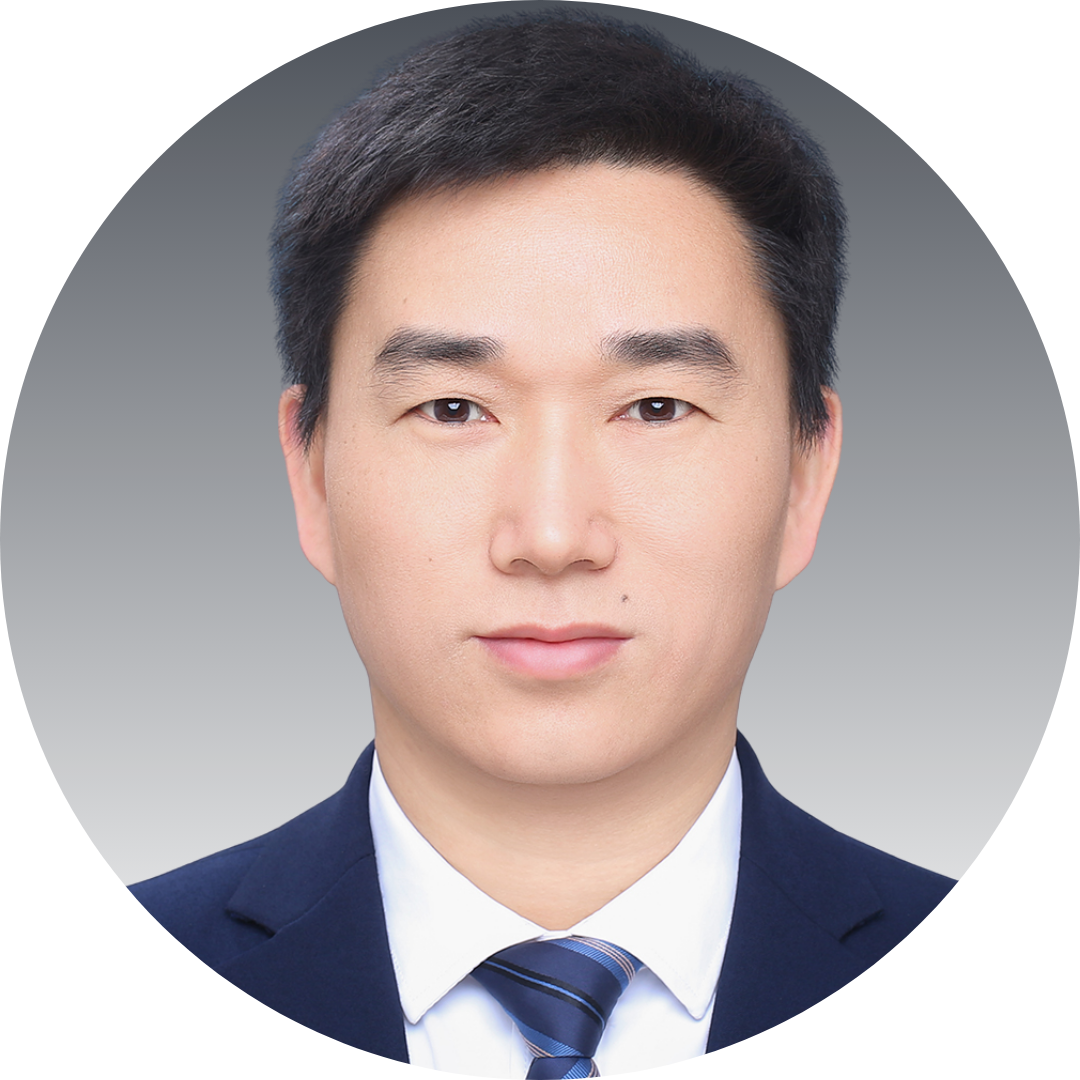 Zhaohua Liu
Hunan University of Science and Technology, China
Biography: PhD, Professor, Distinguished Professor of Hunan Furong Scholar Program, Recipient of Hunan Huxiang Young Talents, Leading Talent of Hunan University of Science and Technology. Director of Hunan Engineering Technology Research Center for Intelligent Perception and Active Grid-Connection of New Energy Equipment, Visiting Scholar at the University of Sheffield, UK, Senior Member of IEEE and CAA. He has presided over 3 National Natural Science Foundation of China projects, a sub-project of the National Key R&D Program, Hunan Provincial Key R&D Program, Key Project of Hunan Provincial Natural Science Foundation and other research projects. He has published more than 70 high-quality papers in journals including IEEE Transactions series and Acta Automatica Sinica, and authored 2 monographs. Over 30 patents have been granted (some licensed and transferred). His honors and awards include Hunan Advanced Manufacturing Science and Technology Innovation Person Award, World’s Top 2% Scientists, First Prize of Excellent Teacher in Asia-Pacific Artificial Intelligence Education, Second Prize of Natural Science Award from Chinese Association of Automation, Second Prize of Innovation Achievement Award from China Invention Association, and other accolades.
Speech Title: Multi-level Intelligent Optimization Control Technology for Offshore Wind Turbine
Abstract: TBD
Invited Speaker Ⅱ
 Yu Wang
Chongqing University, China
Biography: Yu Wang is a Professor and PhD Supervisor at Chongqing University, Deputy Academic Director of the State Key Laboratory of Power Transmission and Transformation Equipment Technology, and has been selected for the National Youth Talent Program. He received his PhD degree from Nanyang Technological University, Singapore, and formerly worked as a Marie Curie Research Fellow at Imperial College London.
Speech Title: LLM Agent Workflow for Power System Operation and Control
Abstract: Driven by the carbon peaking and carbon neutrality goals, the new-type power system is rapidly evolving toward high penetration of renewable energy and power electronics, bringing profound transformations across the source-grid-load-storage chain. As system complexity and uncertainty keep rising, traditional approaches to simulation modeling, dispatch decision-making and stability analysis are facing common industry bottlenecks: long iteration cycles, slow scenario adaptation, and high labor costs. Focusing on the practical deployment of large language model (LLM) and intelligent agent technologies in power system operation and control, this report systematically reviews the technological evolution of AI-enabled power regulation and presents two core research outcomes. The first is a full closed-loop method for LLM-driven transient stability assessment: it enables automated simulation via prompt engineering, retrieval-augmented generation (RAG) and feedback mechanisms, and achieves automatic neural architecture search through multi-agent collaboration, delivering classification accuracy and parameter efficiency that significantly outperform manual baselines. The second is a text-to-control LLM agent workflow for networked microgrids, which generates reinforcement learning scheduling strategies with expert-level performance in a short time through chained multi-agent collaboration covering task interpretation, mathematical modeling, algorithm design and code generation. The report also introduces the self-developed PSASP AI Agent power system analysis platform, and discusses future directions including multi-agent collaboration under physical mechanism constraints and domain knowledge enhancement, offering a novel technical paradigm and practical pathway for the digital and intelligent operation of new-type power systems.
Invited Speaker Ⅲ
 Fengzhe Dai
South China University of Technology
Biography: His research focuses on power system demand-side management and demand response. He has published or had accepted three SCI-indexed journal papers and four EI-indexed journal and conference papers, and has filed five invention patent applications. He has participated in the Smart Grid-National Science and Technology Major Project (2024ZD0802000), as well as several research projects supported by State Grid Corporation of China and China Southern Power Grid.
Speech Title: A Fast Assessment Method for Multiple Values of Power System Source–Load Resources Based on the VCG Mechanism and State-Space Compression
Abstract: TBD
Invited Speaker Ⅳ
 Khadim Moin Siddiqui
SR Institute of Management & Technology, India
Biography: Dr. Khadim Moin Siddiqui (Senior Member, IEEE) was born in Hamirpur, Uttar Pradesh, India. He received his Ph.D. in Electrical Engineering from the Institute of Engineering & Technology, Lucknow, affiliated with Dr. A.P.J. Abdul Kalam Technical University, in 2017. He is currently an Associate Professor in the Department of Electrical & Electronics Engineering at SR Institute of Management & Technology, Lucknow, with over 15 years of academic and research experience.
He has published more than 80 research papers in reputed peer-reviewed journals, international conferences, and book chapters and holds four patents, including three granted patents. His research interests include condition monitoring and fault diagnosis of electrical machines, signal processing, and power converters and drives. He is a Senior Member of IEEE and actively contributes to the IEEE community as a Student Branch Counselor and Chapter Advisor for IEEE PES, PELS, and EMBS. He is also a member of the IEEE Signal Processing Society. His research impact includes over 715 Google Scholar citations, an h-index of 13, and an i10-index of 16.
Dr. Siddiqui has authored four research books in English, two of which have been translated into French, German, Italian, Portuguese, Russian, and Spanish. He has received a Ph.D. fellowship under TEQIP Phase-II and an M.Tech. scholarship from the Ministry of Human Resource Development, Government of India.
His IEEE leadership includes serving as Editor of the IEEE UP Section Magazine and as a member of the Membership Development Committee. He has received the Young Professional Star Award and Outstanding PES Chapter Advisor Award. He has also completed the IEEE Volunteer Leadership Training Program.
He has received four Best Research Paper Awards and contributed as Guest Editor/Editor for reputed international journals. He has completed two IEEE Region 10 projects as Project Coordinator and has organized numerous professional events as Chair, Convener, and Organizing Secretary.
Speech Title: Condition Monitoring and /Fault Diagnosis of Induction Motor using Advanced Signal Processing Techniques
Abstract: Induction motors are among the most widely used electrical machines in industrial applications, where their reliable and efficient operation is essential for maintaining productivity and reducing unexpected downtime. However, faults such as bearing defects, broken rotor bars, stator winding abnormalities, eccentricity, and mechanical unbalance can progressively deteriorate motor performance. Therefore, early condition monitoring and accurate fault diagnosis are essential for improving reliability, safety, and maintenance planning. This presentation focuses on condition monitoring and fault diagnosis of induction motors using advanced signal processing techniques. The basic principles of motor condition monitoring are discussed, followed by the analysis of electrical and vibration signals for identifying incipient faults. Particular emphasis is given to time-domain, frequency-domain, Fast Fourier Transform (FFT), and wavelet-based techniques for extracting fault-related features from measured signals. Motor Current Signature Analysis (MCSA) is also discussed as a non-invasive and cost-effective approach for detecting electrical and mechanical abnormalities without requiring direct access to the motor. The presentation explains how characteristic changes in current and vibration signatures can be correlated with different fault conditions, enabling early identification and severity assessment. The comparative advantages and limitations of conventional and advanced signal processing approaches are highlighted, along with their practical applications in industrial predictive maintenance. The presentation concludes by discussing emerging opportunities for integrating advanced signal processing with intelligent diagnostic techniques to develop reliable, automated, and real-time condition monitoring systems for induction motors.