
Keynote Speaker I
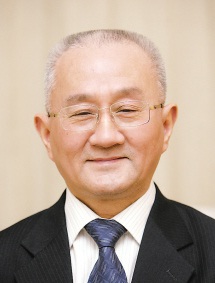
Prof. Yusheng Xue
Academician of Chinese Academy of Engineering
State Grid Electric Power Research Institute, China
报告题目:气象风险下的电力规划与运控
Keynote Speaker Ⅱ

Prof. Josep M. Guerrero
IEEE Fellow
Zhejiang University, China
Biography: Josep M. Guerrero (S’01-M’04-SM’08-FM’15) received the B.Sc. degree in telecom engineering, M.Sc. degree in electronics engineering, and PhD degree from the Technical University of Catalonia, Barcelona, Spain. Since 2011, he has been a Full Professor with AAU Energy, Aalborg University, Denmark, where he is responsible for the Microgrid Research Program. From 2019, he became a Villum Investigator by the Villum Fonden, which supports the Center for Research on Microgrids (CROM) at Aalborg University, being Prof. Guerrero the founder and Director of the same center (www.crom.energy.aau.dk). In 2020, he initiated neuroscience studies and research. As a result, in 2022 he received the M.Sc. degree in Psychobiology and Cognitive Neuroscience from the Institute of Neuroscience (INc) at the Autonomous University of Barcelona, and in 2023 he received the M.Sc. degree in Sleep: Physiology and Medicine at the University of Murcia, Spain. From 2023 to 2024 he was with the Technical University of Catalonia as an ICREA Research Professor. In 2023 he joined Huanjiang Laboratory, Zhejiang University, as a director of the CROM, Zhuji, Shaoxing, China. In 2025 he became a Distinguished Senior Researcher at the department of electrical engineering, University of Valladolid, Spain.
Speech title: Practical Aspects when Implementing Grid Forming Converters
Keynote Speaker Ⅲ

Prof. Pierluigi Siano
University of Salerno, Italy
Biography: Pierluigi Siano (Senior Member, IEEE) received the M.Sc. degree in electronic engineering and the Ph.D. degree in information and electrical engineering from the University of Salerno, Salerno, Italy, in 2001 and 2006, respectively. He is currently a Full Professor of electrical power systems and the Scientific Director of the Smart Grids and Smart Cities Laboratory, Department of Management and Innovation Systems, University of Salerno. In these fields, he has co-authored six international books, and more than 800 articles including more than 500 articles in international journals, which have received more than 36000 citations on Scopus, achieving an H-index of 89. His research interests include centered on demand response, energy management, the integration of distributed energy resources into smart grids, electricity markets, and the planning and management of power systems. Since 2019, he has been awarded as a Highly Cited Researcher by the Web of Science Group. He has been the Chair of the IES TC on Smart Grids. He is an Editor of the Power and Energy Society Section of IEEE Access, IEEE Transactions on Power Systems, IEEE Transactions on Industrial Informatics, IEEE Transactions on Industrial Electronics, and IEEE Systems.
Speech title: IoT based Methods and Architectures for Demand Response in Smart Grids
Abstract: In the last decades, the innovation in the new renewable energy technologies, the incentives to renewable sources usage and the introduction of the Information and Communication Technologies (ICTs) have been some of the drivers to the restructuring of the electric power industry. One of the main innovations in the electrical energy management has been the introduction of smart grids, which are electric grids integrating advanced sensing technologies, control methodologies and communication infrastructures. In this way the interaction of all connected users with the objective of efficiently managing the variation of load demand is facilitated. At the distribution level, the smart grid concept is realized by microgrids, electrical networks composed of small scale independent power producers, Distributed Generators (DGs), local storage devices and controllable loads managed by hierarchical system control architecture in a small geographical area. In this complex environment, an essential role is played by Demand Response (DR) which denotes variations of the electric consumption by users in response to the energy price changes over the time, or in the presence of financial incentives and reliability signals.
Keynote Speaker Ⅳ
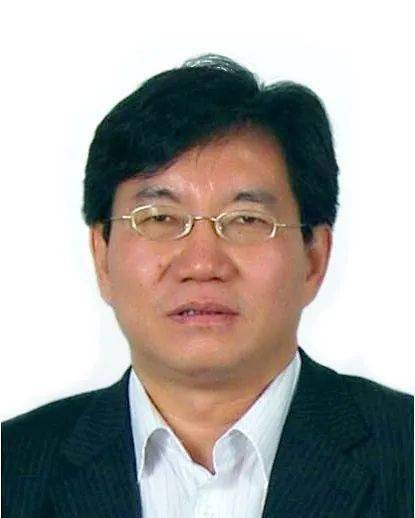
Prof. Fushuan Wen
Zhejiang University, China
Speech title: Correlation Analysis Among Electricity Price, Carbon Price and Fossil Fuel Price
Invited Speaker Ⅰ

Assoc. Prof. Zhe Zhang
Xi'an University of Architecture and Technology, China
Speech title: Research on Response-Driven Power System Voltage Stability Assessment and Control Strategy
Abstract: With the leap-forward growth of new energy sources such as wind power and photovoltaics in China, high-voltage direct current transmission projects continue to be put into operation, forming the world's largest and most complex power grid. The characteristics of weak immunity and reactive power support capability of power electronic equipment aggravate the risk of transient voltage instability and overvoltage phenomenon after AC and DC faults. For the voltage stability emergency control scenario, considering the extreme operation mode, the mismatch mechanism of pre-scheme control measures is revealed, and the adaptive start-up mechanism of response-driven control is designed. By predicting the improvement of voltage stability level after each control measure, the sensitivity of response-driven emergency control measures is determined, and the emergency control optimization strategy considering the actual operation constraints of power system is obtained. In addition, for the overvoltage prevention control scenario, based on the knowledge-data fusion overvoltage prediction model, the mapping relationship between the control quantity and the overvoltage level in the flexible and variable operation mode is established. The overvoltage suppression effect of each control measure is evaluated by predicting the overvoltage level before and after the adjustment of control quantity, and the optimization strategy of overvoltage prevention control is obtained by combining the results of prevention control sensitivity.